
Hire a WordPress Designer: What Small Businesses Need to Know
A website is the digital front door of a small business, and more owners than ever want to create a website that looks polished without draining the budget. Many of them choose to use WordPress because the WordPress platform is flexible, widely supported, and friendly to teams without a technical background. Once that decision is made, though, a bigger question follows: who is going to build it?
Business owners who want to hire a WordPress designer often discover that the choices are wider than expected. There are freelancers, agencies, marketplaces, and vetted talent networks, and each comes with its own price tag and its own risks. This guide walks through what small businesses should know before they start, from the difference between a designer and a developer to the questions worth asking before anyone signs a contract.
WordPress Designer vs. WordPress Developer: What Is the Difference?
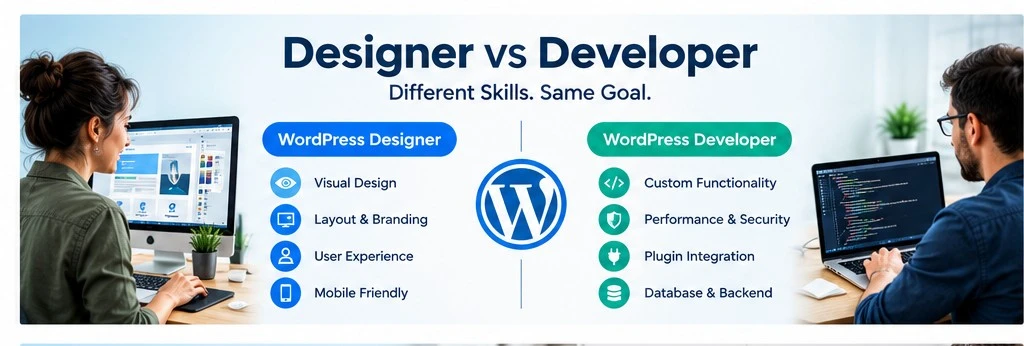
The two terms are often used, but they describe different strengths. Knowing which one a project actually needs can save weeks of back-and-forth and a good chunk of money.
What a WordPress Designer Does
A WordPress designer focuses on how a site looks and feels. That includes layout, color choices, typography, imagery, and the overall visitor experience. Strong web design and thoughtful website design make it easy for customers to understand what a business offers and what to do next. A WordPress website designer usually works with a well-coded WordPress theme or builds a visual direction that matches the brand, and the best ones think about mobile screens first.
What a WordPress Developer Does
A WordPress developer works behind the scenes. Code, performance, security, and functionality are the main concerns. A reliable web developer treats these as the foundation of every build. Anyone with solid web development training can connect booking tools, set up online payments, speed up slow pages, and make sure everything works across browsers. A WordPress website developer may also be the person who builds a custom theme from scratch, so the site is not stuck with the same look as thousands of others. Bigger ideas, such as a custom WordPress website with member areas or special booking rules, call for custom WordPress development, and some owners simply want a custom website that matches a very specific workflow.
Why Many Projects Need Both
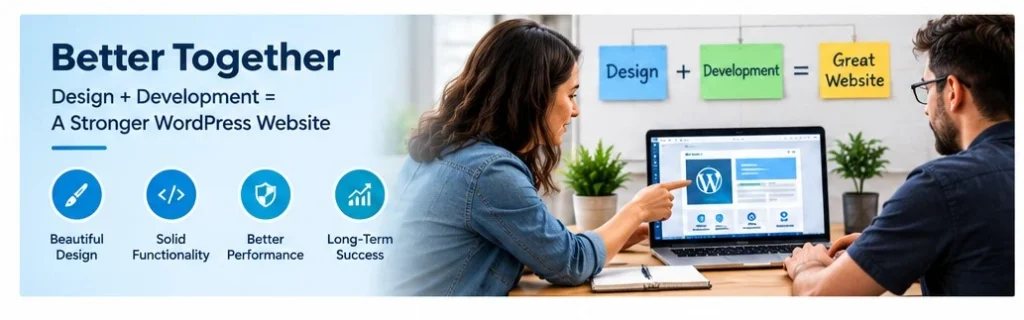
Small projects sometimes get by with one person who covers both sides. Bigger ones, such as a service business with online scheduling or a shop with a large catalog, usually benefit from designers and developers working together. A full-stack developer can bridge the gap on leaner budgets, handling front-end polish and back-end logic in the same project. Some teams describe the ideal setup as developers and designers sharing one workflow instead of passing files back and forth.
Why Hiring a WordPress Developer Makes Sense for Small Businesses
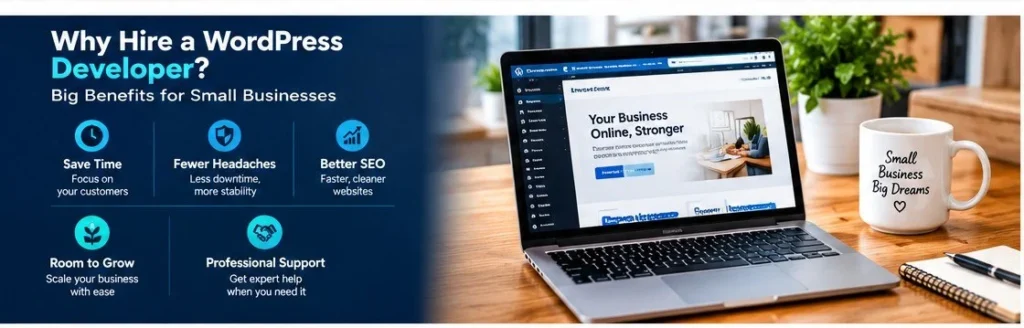
Plenty of owners try the do-it-yourself route first, and hiring WordPress specialists only comes up once the limits of templates become obvious. Website builders and templates can work for a simple page, but trouble tends to appear once the business needs more than a brochure. Hiring a WordPress developer can pay off in several ways:
- Time saved. Owners can spend their hours serving customers instead of troubleshooting plugins.
- Fewer technical headaches. A professional WordPress setup is less likely to break after an update.
- Better search visibility. Clean code and fast loading speeds support rankings.
- Room to grow. A thoughtful build can handle new pages, products, and features later on.
Small businesses that decide to hire a WordPress developer early often avoid expensive rebuilds down the road. Those looking to hire a WordPress expert should still take time to compare options, because the right fit matters more than the fastest start.
Freelance, Agency or Dedicated: Which Option Fits?
There are three main routes, and each suits a different type of business.
Hiring a Freelance WordPress Developer
A freelance WordPress developer works independently, usually on a project basis. Freelancers are often more affordable than agencies and can be very flexible. Hiring a freelance WordPress developer works well for focused tasks like a redesign, a landing page or a single WordPress plugin fix. The trade-off is availability: one freelancer is one person, so illness or a packed schedule can slow things down. Many of the best freelance WordPress developers stay booked months in advance, so early planning helps.
Working With a WordPress Development Agency
A WordPress development agency brings a full team to the table, including designers, developers, project managers, and testers. A leading WordPress development company can handle large builds, tight deadlines and ongoing support, and many package their offerings as WordPress development services with clear monthly pricing. The cost is higher, but so is the safety net. When one person leaves, the work does not stop. For businesses that want a single point of contact, a team of developers under one roof can be reassuring.
Bringing in a good WordPress Developer
Some growing businesses need steady, ongoing work rather than a one-off project. In that case, a dedicated WordPress developer can act almost like an extension of the in-house team. Companies that need a dedicated WordPress developer often go through an agency or a talent network. Others choose to hire dedicated WordPress developers on monthly contracts so the same people learn the business and its systems over time. A related setup is to hire a dedicated WordPress developer for a fixed number of hours each month, which keeps costs predictable.
Where to Find WordPress Experts for Hire
Knowing where to look is half the battle. Searches for WordPress experts for hire return a flood of results, and browsing WordPress developers for hire across different channels shows how much quality and price can vary. It helps to understand how the main channels differ.
Freelance Marketplaces Such as Upwork
A freelance marketplace like Upwork lets business owners post a WordPress job and receive proposals from many freelancers. The big advantage is choice, along with reviews and work histories that show past performance. The challenge is sorting through the volume. Owners who find WordPress talent this way should read feedback carefully and look for steady, long-term clients instead of only star ratings.
How to Find the Right WordPress Developer
Anyone can claim to be a WordPress expert, so a little detective work goes a long way. Finding the right WordPress developer is less about flashy websites and more about fit. To find the right developer, it helps to look beyond the first page of search results.
Look at Portfolios and Real Results
A strong portfolio shows variety, and live links matter more than screenshots. Owners can visit past projects, click around, and test how fast pages load. An experienced WordPress developer should be able to explain what was built, why choices were made, and what the results looked like for the client. Experience with similar businesses is a bonus, because an experienced developer already knows which features that type of company tends to need.
Check Skills and Credentials
A skilled WordPress developer can usually speak confidently about themes, plugins, security, and performance. A skilled developer should also be comfortable explaining technical topics in plain language. Strong WordPress expertise often shows up in how someone answers practical questions, such as how they handle backups or what they do when an update breaks a page. Skilled WordPress professionals tend to welcome those questions rather than dodge them.
Ask About Communication and Process
Technical talent means little if emails go unanswered. Before hiring, it helps to ask how updates will be shared, how many revision rounds are included, and who owns the files at the end. Owners often say that clear communication ended up mattering more than any single technical skill.
Match the Skill Set to the Job
Some jobs call for expert WordPress developers who know custom code inside out, while others only need a designer who can adjust a theme. Business owners who hire the right person for the job tend to spend less and get results faster. In other words, the goal is to hire the right professional, not necessarily the most expensive one. Many owners say they want to hire the best WordPress professional available, but “best” really means best for the project at hand. A business that wants to hire an expert for a narrow task does not need a large team, and one with a big build should not rely on a beginner.
The Cost to Hire a WordPress Developer
Pricing is the question on every owner’s mind, and the honest answer is that it varies widely. The cost to hiring a WordPress developer depends on experience, location, project size and the hiring model.
What Affects the Price
- Scope. A five-page site costs far less than a custom store with memberships and bookings.
- Experience. Senior talent charges more but often works faster and makes fewer mistakes.
- Customization. Tailored designs and a custom theme take more hours than a lightly edited template.
- Hiring model. Freelancers, agencies, and dedicated arrangements all price differently.
Defining Project Requirements Before Hiring
One of the most common reasons projects go sideways is a vague brief. Writing down project requirements before reaching out helps everyone stay on the same page. A good brief usually covers:
- The goal of the site, such as leads, sales, or bookings
- Pages and features needed at launch
- Design preferences and example sites that inspire the business
- Budget range and target launch date
- Who will manage content after launch
A clear brief also makes it easier to compare proposals fairly. Owners who plan to hire WordPress developer candidates from several sources can send the same document to all of them.
Think About the Bigger Picture
Some businesses are not starting from zero. They might be moving an existing website to WordPress from another builder, or adding a web application such as a customer portal or booking system. Others only want WordPress web design to refresh an outdated look. Each of these paths needs different skills, so the brief should state which one applies. Large builds that go beyond a standard WordPress website development project might call for several developers to build different parts of the system, and some businesses hire WordPress developers to build only the tricky pieces while handling content in-house.
Best Practices for a Smooth WordPress Project
Even the best WordPress builds benefit from a few good habits, and a few more keep things on track once the right hire is made. These best practices come up again and again among agencies and freelancers:
- Start with a written agreement. It should list deliverables, deadlines, payment terms, and ownership of the final files.
- Use a staging site. Changes are tested away from the live site first.
- Give timely feedback. Delays in approvals are one of the biggest causes of late launches.
- Keep accounts under the business’s control. Domain, hosting, and admin access should belong to the owner.
- Plan for content early. Great design can stall when text and images arrive late.
Common Mistakes Small Businesses Make
Mistakes are easy to avoid once they are known. A few show up repeatedly:
- Choosing purely on price and ending up paying twice
- Skipping reference checks
- Letting a developer install too many plugins, which can slow the site and create security gaps
- Forgetting about mobile users
- Not asking who will handle WordPress maintenance after launch
Life After Launch: WordPress Maintenance
A site is never really finished. Core updates, plugin updates, backups, and security scans all need regular attention. Without WordPress maintenance, even a beautiful site can slow down or become vulnerable. Many freelancers and agencies offer monthly care plans, and it is worth discussing this before the project ends. Some businesses keep the original builder on retainer, while others prefer a separate provider.
Final Thoughts
Hiring a WordPress designer or developer is one of the bigger decisions a small business makes about its online presence. Taking time to understand the roles, compare freelance and agency options, set a realistic budget, and write a clear brief makes the whole process smoother. When the right person is matched with the right project, a WordPress site can become a reliable tool for attracting customers and growing the business for years.